Showing posts with label abortion. Show all posts

Thursday, March 1, 2012

An Argument FOR "After-birth abortion: why should the baby live?"

The Journal of Medical Ethics recently published an article arguing for infanticide (the killing of infants, which they call "after-birth abortion"), "After-birth abortion: why should the baby live?" (PDF) (On a related note: Read about President Obama's support of infanticide as a Senator here.)

The abstract (summary of points) is:
Abortion is largely accepted even for reasons that do not have anything to do with the fetus' health. By showing that (1) both fetuses and newborns do not have the same moral status as actual persons, (2) the fact that both are potential persons is morally irrelevant and (3) adoption is not always in the best interest of actual people, the authors argue that what we call 'after-birth abortion' (killing a newborn) should be permissible in all the cases where abortion is, including cases where the newborn is not disabled. 

Sunday, January 22, 2012

Exodus 3:21-22 - Yahweh v. Pharaoh and Roe v. Wade: How the Exodus Teaches Us to Think About and Respond to 21st Century Social Issues


© Eric M Schumacher — Preached January 20, 2012 at Northbrook Baptist Church, Cedar Rapids, Iowa

Today marks the 39th anniversary of Roe v. Wade, the U.S. Supreme Court decision on abortion—which has since resulted in the lives of over 50,000,000 unborn children being lost. 

Every year since I have been at Northbrook, I have used this Sunday to either address the issue of abortion and sanctity of life directly or have meditated on how the topic of the sermon applies to our response to abortion.

My sermon this morning will not be a defense of the idea that abortion as murder. I have already addressed that issue in previous sermons, which you can download to read or listen to. 

Neither will my sermon be training in how to argue persuasively in our culture. I have also done that in previous sermons. (For excellent resources, see: The Case for Life, Pro-Life Answers to Pro-Choice Arguments, Abort73.) 

Rather, what I want to do this morning is this: I want to examine how the Exodus informs how we should respond to abortion. I want to ask the big questions: How do we respond as Christians? Does Exodus speak to this today? And I want to pursue and answer by meditating on this text, asking three questions:
(1) What does this text tell about God?
(2) What does this text tell us about being God’s people?
(3) How then should we respond to abortion?

Sunday, January 23, 2011

Ronald Reagan: Proclamation 5147 -- National Sanctity of Human Life Day, 1984

Proclamation 5147 -- National Sanctity of Human Life Day, 1984

January 13, 1984
By the President of the United States

of America

A Proclamation

The values and freedoms we cherish as Americans rest on our fundamental commitment to the sanctity of human life. The first of the ``unalienable rights'' affirmed by our Declaration of Independence is the right to life itself, a right the Declaration states has been endowed by our Creator on all human beings -- whether young or old, weak or strong, healthy or handicapped.

Since 1973, however, more than 15 million unborn children have died in legalized abortions -- a tragedy of stunning dimensions that stands in sad contrast to our belief that each life is sacred. These children, over tenfold the number of Americans lost in all our Nation's wars, will never laugh, never sing, never experience the joy of human love; nor will they strive to heal the sick, or feed the poor, or make peace among nations. Abortion has denied them the first and most basic of human rights, and we are infinitely poorer for their loss.

We are poorer not simply for lives not led and for contributions not made, but also for the erosion of our sense of the worth and dignity of every individual. To diminish the value of one category of human life is to diminish us all. Slavery, which treated Blacks as something less than human, to be bought and sold if convenient, cheapened human life and mocked our dedication to the freedom and equality of all men and women. Can we say that abortion -- which treats the unborn as something less than human, to be destroyed if convenient -- will be less corrosive to the values we hold dear?

We have been given the precious gift of human life, made more precious still by our births in or pilgrimages to a land of freedom. It is fitting, then, on the anniversary of the Supreme Court decision in Roe v. Wade that struck down State anti-abortion laws, that we reflect anew on these blessings, and on our corresponding responsibility to guard with care the lives and freedoms of even the weakest of our fellow human beings.

Now, Therefore, I, Ronald Reagan, President of the United States of America, do hereby proclaim Sunday, January 22, 1984, as National Sanctity of Human Life Day. I call upon the citizens of this blessed land to gather on that day in homes and places of worship to give thanks for the gift of life, and to reaffirm our commitment to the dignity of every human being and the sanctity of each human life.

In Witness Whereof, I have hereunto set my hand this 13th day of January, in the year of our Lord nineteen hundred and eighty-four, and of the Independence of the United States of America the two hundred and eighth.

Ronald Reagan

[Filed with the Office of the Federal Register, 10:24 a.m., January 16, 1984]

(Source: Reagan Archives)

Friday, January 21, 2011

Why Peter Gentry's Address on "Holiness" Matters for the Pre-born

Peter Gentry's faculty address at Southern Seminary, "No One Holy, Like the Lord," has been rolling around in my head this past week. I think his argument is convincing. Holiness is not primarily "moral excellence" or "separateness / transcendence," but "single-minded devotion to the Lord's purposes." (That is my summary, not his words.)

As I was reflecting on abortion and the anniversary of Roe v. Wade, it occurred to me why Gentry's argument is important for the pre-born.

I affirm two things about human life:
  1. I affirm that all human beings are “conceived in sin” and “brought forth in iniquity” (Ps 51:5), “by nature children of wrath, like the rest of mankind” and “dead in [their] trespasses” (Eph 2:3-4).
  2. I affirm the "sanctity (holiness) of human life," from the moment of conception.
If holiness is "moral excellence," then I cannot affirm "the sanctity of human life." 

But since if it means "devotion to the Lord's purposes," I can and should affirm and defend "the sanctity of human life," from inside the womb unto old age.

Man is created with a special purpose, unique among all created things. He is made "imago dei," in the image of God, to be devoted to imaging forth the glory of God in his dominion over the earth. How man lives reflects on God. And how we treat man reflects how we value God. (This is why justice and mercy toward human beings, especially the weak and afflicted, is so central to how God's people are to live.)

Therefore, created imago dei, human life is "holy," set apart to be single-mindedly devoted to God's purposes. And so abortion is evil.

But, in his disposition, living, thinking, choosing, loving, acting, he rebels against this purpose--he is unholy. Man sins by refusing to live with this single-minded devotion to imaging forth God's glory. And so, man is sinful from the womb.

And this why we need the Holy One, Jesus Christ, who life, death and resurrection, grant forgiveness of sins and the life of the age to come to those who repent and believe, and who indwells them with the Holy Spirit so that they can truly be a holy people as they await the holy city, which will be in the midst of a new heavens and new earth, where everything is holy to the Lord.

So, go listen to Dr. Gentry's address, and stand for "the holiness of human life," even in the womb.

------------------------------------------------------
Recommended resources:

Abortion & Sanctity of Life Sermons

Following the example of John Piper, I've made a point to either preach on the sanctity of life explicitly or make direct application to it on Sanctity of Human Life Sunday in my years as a pastor.

Here are links to some sermons on Abortion and Sanctity of Life since I've been at Northbrook Baptist:
Recommended resources:

Wednesday, January 19, 2011

State Inspectors Ignore Complaints Regarding Abortion/Infanticide Doctor for 17 Years!!!

What this doctor did was evil.

That state inspectors ignored complaints since 1993 is equally evil.

This Associate Press article is not for the faint at heart:
PHILADELPHIA (AP) — A doctor who provided abortions for minorities, immigrants and poor women in a "house of horrors" clinic has been charged with eight counts of murder in the deaths of a patient and seven babies who were born alive and then killed with scissors, prosecutors said Wednesday.

Dr. Kermit Gosnell, 69, made millions of dollars over 30 years, performing as many illegal, late-term abortions as he could, prosecutors said. State regulators ignored complaints about him and failed to inspect his clinic since 1993, but no charges were warranted against them given time limits and existing law, District Attorney Seth Williams said. Nine of Gosnell's employees also were charged.

Gosnell "induced labor, forced the live birth of viable babies in the sixth, seventh, eighth month of pregnancy and then killed those babies by cutting into the back of the neck with scissors and severing their spinal cord," Williams said.

Friday, January 14, 2011

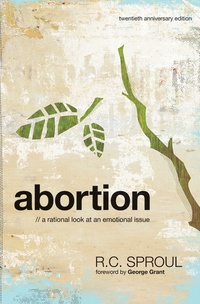
R.C. Sproul: “…a book I wish I did not have to write."

In the video below, R.C. Sproul discusses his book, Abortion.

Please be in prayer for this book. A copy of it, along with an open letter from Dr. Sproul, will be sent to every member of the new Congress. Please pray the Lord would use it to influence hearts and minds.

Bulk discounts are available from Ligonier.
 
R.C. Sproul Discusses the Issue of Abortion from Ligonier on Vimeo.

Wednesday, November 3, 2010

Bold Stand for Women's Rights (and Illogical Responses)

Katie Sandquist, the Executive Director of Aid to Women, has published an excellent guest column in the Cedar Rapids Gazette, "Unintended pregnancy not the cause of abortion," in response to a previous column by the Gazette's editorial board. In it, she boldly stands for women's rights, addressing the truth about telemedicine, communication of choices to women, and the dangerous and real mental health implications of abortion. She writes:

Monday, May 17, 2010

Abortion by Video Conference

Planned Parenthood (note: don't be misled by their name) is using a first-in-the-nation system in Iowa, offering abortion consultations with doctors by video conferencing. The doctor can then, with the press of a button, dispense an abortion pill to the patient.

John Calvin on Abortion

"...for the fetus, though enclosed in the womb of its mother, is already a human being, and it is almost a monstrous crime to rob it of the life which it has not yet begun to enjoy. If it seems more horrible to kill a man in his own house than in a field, because a man's house is his place of most secure refuge, it ought surely to be deemed more atrocious to destroy a fetus in the womb before it has come to light."

~ John Calvin (1509-1564), Commentary, Exodus 21:22.

Wednesday, May 12, 2010

Blood Money: Documentary on the Profit of Abortion

Read more about Blood Money. Watch the trailer below:


Recommended resources:

Thursday, March 18, 2010

Planned Parenthood: Abortion "Kills the Life of a Baby" and "Is Dangerous to Your Life and Health"

Live Action posts scans from a 1952 pamphlet on birth control, produced by Planned Parenthood.

The pamphlet (see below) clearly states that an abortion "kills the life of a baby after it has begun," "is dangerous to your life and health," and "may make you sterile."

Apparently, things were clearer before abortion was legal (and abundantly profitable for PP).


(HT:Z)

Recommended Resources:

Friday, January 22, 2010

The Anniversary of a Very Bad Decision


It is one of the most influential and controversial decisions in the history of the United States. 

Shouldn't you at least study what it is all about? 

I'd challenge all readers to visit the link below and watch the series of overview videos.


Learn more here.

Tuesday, November 3, 2009

Planned Parenthood Director Resigns After Ultrasound

KBTX reports that a Planned Parenthood director resigned after watching an ultrasound of an abortion.

"I just thought I can't do this anymore, and it was just like a flash that hit me and I thought that's it," said Jonhson.


Wednesday, August 19, 2009

Abortions Surge in China

Sad news from the East:
More than 13 million abortions are performed each year in China, according to statistics disclosed by Chinese health officials on Thursday, a marked increase from 2003, the most recent statistics available. When unreported and medication-induced abortions are counted, the actual number is substantially higher...
Consider adopting from China.

Friday, May 29, 2009

Abortion Debate: George v. Kmiec

Ryan Anderson writes:
Last night at the National Press Club in DC, Robby George and Doug Kmiec squared off in a civil discussion (otherwise known as a debate) on President Obama and pro-life issues. This morning on Public Discourse, we publish an adapted version of Professor George’s opening statement. Anyone interested in watching the entire debate (which was televised on C-SPAN) can do so here. It was quite good and is well worth watching, especially for the back-and-forth and Q-and-A.
(HT: JT)

Thursday, May 28, 2009

Fetal Rights Trump Mother's Autonomy

Update: I watched the repeat airing of the show this morning, in order to verify the accuracy of the quote dealt with below. The transcript is accurate in the quote. However, it is ascribed to the wrong person. The transcript credits the quote to Barbara Chadwick, Director of Patient Services for Planned Parenthood of East-Central Iowa. Watching the show, I discovered that these words were spoken by Janine Idziak, professor of philosophy at Loras College in Dubuque.

I still think that Ms. Idziak's argument is worth paying attention to. (In fact, she elsewhere contributes good, pro-life comments to the discussion.) So, I've updated this post to accurately reflect the program (and not the erroneous transcript). I must admit that I am disappointed by the transcriber's error. I would have liked very much to think that such lucid pro-life arguments were being made by Planned Parenthood.
Do the rights of “developing fetuses” trump the rights of the mother, the family and society?

The May 24 episode of Ethical Perspectives on the News dealt with the subject of “Multiple Births and Fertility Clinics.” As I scanned the transcript of the program, the following paragraph caught my attention. (The full transcript is available here, for now. I have posted the full transcript on my blog, here, and have saved a copy, should it be removed from their website. I am posting the follow paragraph as it appears in the transcript, including misspellings [such as, “non-maleffecence” and “fetusus”] and the all-caps format. It appears that a few words may have been missed by the transcriber. I will attempt to get a video copy of the program. Should I discover missing words, particularly those that change the context significantly, I will adjust the post.):
BARBARA: I APPRECIATE YOUR CONCERN ABOUT SOCIETAL RESOURCES BEING USED TO SUPPORT 14 CHILDREN FROM ONE MOM, BUT I THINK BEYOND THE ISSUE OF THE NUMBER OF CHILDREN A FAMILY HAS IS THE ISSUE OF THE HARM THAT CAN COME BOTH TO THE FETUS AND THE MOTHER IN A MULTI-FETAL PREGNANCY. THAT IS BAD FOR THE DEVELOPING FETUSES IS THAT THEY WILL LIKELY BE BORN PREMATURE, THEY SUFFER DEVELOPMENTAL DISABILITIES. A MULTI-FETAL PREGNANCY CAN ALSO BE HARMFUL TO THE MOTHER IN TERMS OF DEVELOPING HIGH BLOOD PRESSURE AND OTHER PHYSIOLOGICAL CONDITIONS. SO FROM AN ETHICAL POINT OF VIEW I THINK THERE ARE TWO PRINCIPLES THAT ARE RELEVANT HERE: FIRST OF ALL, ON AUTONOMY. THE RIGHT OF THE WOMAN OR THE COUPLE TO DETERMINE THE SIZE OF THEIR FAMILY. BUT BALANCE THAT AGAINST NON-MALEFFECENT, OUR DUTY NOT TO ENGAGE IN ACTIONS WHICH CARRY A SUBSTANTIAL HARM TO OTHER PEOPLE. AND I WOULD ARGUE IN THIS CASE THAT NON-MALEFFECENCE TRUMPS THE AUTONOMY. THAT FIRST AND FOREMOST IS THE CONSIDERATION NOT TO ENGAGE IN MEDICAL, IN ACTIONS, WHICH CARRY SERIOUSNESS OF HARMFUL FOR THE MOTHER AND THE DEVELOPING FETUSUS.
Notice the argument being made and where it leads.

First, concern regarding “harm that can come…to the fetus” is a concern that outweighs the concern for proper use of “societal resources.”

Second, concern regarding “harm that can come…to the fetus” is a concern that outweighs “the issue of the number of children a family has.”

Third, the principle of nonmaleficence, which she defines as “our duty not to engage in actions which carry a substantial harm to other people,” applies to “fetuses.”

Fourth, the principle of nonmaleficence “trumps the autonomy,” which is defined to include “the right of the woman or the couple to determine the size of their family.”

Fifth, the principle of nonmaleficence leads to “the consideration not to engage in medical, in actions, which carry seriousness of harmful for…the developing fetusus [sic].” In other words, when a medical action carries serious risk of harm to the fetuses, the principle of nonmaleficence determines that it ought not to be engaged in.

If this argument is followed consistently, it becomes a significant argument against abortion.

Applying the points of her argument in order to abortion, we must conclude:

First, abortion cannot be justified, in full or in part, by an appeal to the best use of social resources, financial or otherwise. Since concern regarding “harm that can come…to the fetus” outweighs the concern for proper use of “societal resources,” then we may not argue for abortion based on the strain that the “fetus” will put on societal resources if born, whether “unwanted,” “severely disabled,” or otherwise. Apparently, “societal resources,” while an appreciated concern, must be surrendered to the concern to prevent “harm…to the fetus.” Death is the greatest “harm that can come…to the fetus,” and therefore abortion cannot be justified by appealing to “societal resources.”

Second, abortion cannot be justified by appealing to the situation of a family. Since concern regarding “harm that can come…to the fetus” is a concern that outweighs “the issue of the number of children a family has,” the situation of a family is secondary to that of preventing “harm that can come…to the fetus.” Again, death is the greatest “harm that can come…to the fetus,” and therefore abortion cannot be justified by appealing to the negative impact that the birth of the “fetus” will have on the family unit.

Third, abortion cannot be justified by appealing to the status of the “fetus” as that of a non-person. These statements reveal that the status of a “fetus” is that of a “person,” the same as the status of the mother. The principle of nonmaleficence as “our duty not to engage in actions which carry a substantial harm to other people.” She applies this principle to “developing fetuses,” alongside the “mother.” Thus, she defines “developing fetuses” as “other people.” Death is the greatest “harm that can come…to the fetus,” and therefore abortion cannot be justified by appealing to the standing of the fetus as less than that of a “person.” Just as one would seek prevent harm to, especially the harm of death, to the “mother,” we must equally seek to prevent harm, especially death, to the “developing fetuses.”

(A side-road worth traveling, but which I will forgo, is the discussion of what constitutes a “mother.” Can one be a “mother” without a “child”? And if not, then who is the “child”? And if the child is the “developing fetus,” which it must be in the instances under discussion, then isn’t the abortion of a “developing fetus” the killing of a mother’s child? And, if a “mother” has the legal right to kill her “child” when it is in the womb eight months prior to birth, why does she not have that right eight months after it has left the womb? Why do we provide surgical procedures to end the life of a child in the womb, but prosecute the mother who ends the life of her child by drowning it in the bathtub? What difference does the location of a child make? Or, for that matter, the developmental level of the child? But, I digress…)

Forth, abortion cannot be justified by appealing to the rights of a woman. Ms. Idziak clearly states that the principle of “autonomy,” which includes “the right of the woman…to determine the size of [her] family,” is “trumped” by the principle of nonmaleficence toward the “fetus,” which is a person. The heart of this argument is that the “fetus” is a person who has the right be treated in a way that will do it “no harm,” a right which trumps that of the mother. Death is the greatest “harm that can come…to the fetus.” Only the death of the mother could equal weight of concern due to the death of the fetus. This implies that, except that the development of the fetus necessarily and directly threatens the life of the mother, the well-being of the fetus trumps the rights of the mother. Therefore, abortion cannot be justified by appealing to “women’s rights.”

Fifth, abortion cannot be justified since it necessarily involves the greatest harm possible to the developing fetus—death. It is argued that “the consideration not to engage in medical, in actions, which carry seriousness of harmful for…the developing fetusus [sic].” The words are jumbled, but the intent is clear. Serious consideration must be given whenever a medical action will involve or could entail serious harm to the “developing fetuses.” Abortion necessarily involves serious harm to a “fetus,” since abortion ends the life of the “fetus,” to put it mildly. Since, the “fetus” is a person with a right to be treated according to the principle of nonmaleficence, a right that trumps the autonomy of the mother, the autonomy of the family, the impact on the family and concern for societal resources, aside from an equally weighty nonmaleficence concern on the part of the mother (the death of the mother), abortion cannot be justified.

Let’s hope that this type of argument and such lines of reasoning not only continue to be made by college professors, but that they are put into action in society!

Thanks to Prof. Idziak for boldly drawing attention to this concern for fetal-rights. May unborn persons soon be granted the right to be treated by the principle of nonmaleficence!