Two encouraging blog posts by John Piper to encourage pastors:
---------------------
Showing posts with label pastoral ministry. Show all posts
Showing posts with label pastoral ministry. Show all posts
Thursday, March 8, 2012
Tuesday, October 25, 2011
War & Peace: How Church Conflict Taught a Pastor to Rest in the Gospel
In "War and Peace," Christianity Today interviews Tullian Tchividjian, successor of James Kennedy at Coral Ridge Presbyterian Church, about how he survived a leadership coup by finding rest in the power of the Gospel. (Tullian is the grandson of Billy Graham, author of Jesus + Everything = Nothing.)
Here's how the interview ends:
When I speak to pastors I say, "There is only one thing that will enable you to survive, and that's the gospel. It's not whether your church grows or not. It's not having the right leadership principle. All of those things might be helpful, but the gospel is the only thing that will save you in ministry." You inevitably face crises, slander, unfair criticism, pressure to perform in your professional and personal life. You have to have a model marriage. You've got to have the model children. You've got to be the one logging hours of private prayer every day. I mean there is heavy-duty pressure on pastors to be spiritual giants. What I love about the freeing, liberating power of the gospel is I can stand up on a Sunday morning without fear or reservation and be able to identify my own idols in front of my people. I'll say things like, "I hate to admit this, but part of my motivation for preparing the sermon that I am preaching today is because I want you to think I'm a good preacher. It accentuates my sense of worth." Is that embarrassing to admit? Absolutely! But it's incredibly liberating. I don't have to feel like I have to always be on, that I always have to be performing well, that every sermon's got to be a homerun, that I've got to be modeling perfect piety before all of our people. The pressure's off. Jesus measured up so I wouldn't have to live under the enslaving pressure of measuring up for others. And that's good news.
Amen.
Read the rest here.
Labels:
Gospel,
pastoral ministry


Thursday, March 31, 2011
Galatians 4:12-20 – The Friend-Making Gospel
© Eric M Schumacher – Preached March 27, 2011 at Northbrook Baptist Church, Cedar Rapids, Iowa
Audio will be available here. (Suggested resource: Galatians, Thomas Schreiner)
Anxious Labor
This past week, I spent a lot of time talking and praying and reading Scripture with a dying sister-in-Christ. I arrived in her room Saturday night a few minutes after she went to be with Jesus.
It is an odd feeling, as a pastor, when a church member dies. On the one hand, there is great sadness at losing someone that you loved. On the other hand, there is a sense of joy and even relief. Joy to know that this saint has entered the presence of the Lord, to be with him forever. And relief to know that they finished the course, that they kept the faith, trusting in Jesus until the end.
The labor of a pastor is not to grow a church numerically or to make people happy or to live up to everyone’s expectations. A pastor’s calling and labor is to bring people to Jesus and to help them stay there.
And so, a pastor does not rejoice only at baptisms, when a new Christian proclaims their repentance and faith to the world. A pastor also rejoices at death—not in the death, but to say, “Praise the Lord! They made it! The Lord was faithful to keep them until the end.”
That is something that the Apostle Paul was anxious about. In 2 Corinthians 11, Paul finished his list of hardships and suffering with this: “apart from other things, there is the daily pressure on me of my anxiety for all the churches.”
Last week’s passage ended with Paul’s expression of his anxiety, “I am afraid I may have labored over you in vain.” Paul worked hard in his ministry to the Galatians, as with every church he planted, to bring the Gospel to them and see them come to faith in Jesus Christ. But, if they leave the Gospel of grace to go “under the law” for their standing before God, as the Galatians had begun to do, then his labor has been in vain; it has not accomplished what Paul hoped it would accomplish.
A Labor of Love
Paul was afraid for them because he loved them. He is genuinely afraid for the state of his friends. Their flirtation with a false gospel has brought a concerning change to their relationship and attitude toward Paul. A shared faith in the true Gospel causes people to love each other and creates a deep bond. False gospels tear that apart.
Paul has been arguing for several chapters to defend and explain the true Gospel. His argument has been theological, scriptural, exegetical, and made from redemptive history. It has been a thick, sometimes hard to follow, and required much thought and careful attention.
But here, Paul’s argument is not complicated or hard to follow. It is an argument from friendship. Paul is pleading with them to look at what their relationship was like before and what has happened to it now—hoping that such an argument will call them to their senses.
As Martin Luther wrote in his 1519 commentary, “These words breathe Paul’s own tears.” And those tears cannot be dried, Paul’s anxiety cannot be calmed, until he knows that they are resting safe in the Gospel of Grace.
As we see Paul’s argument, I want to present you with five encouragements for faithful ministry.
Anxious Labor
This past week, I spent a lot of time talking and praying and reading Scripture with a dying sister-in-Christ. I arrived in her room Saturday night a few minutes after she went to be with Jesus.
It is an odd feeling, as a pastor, when a church member dies. On the one hand, there is great sadness at losing someone that you loved. On the other hand, there is a sense of joy and even relief. Joy to know that this saint has entered the presence of the Lord, to be with him forever. And relief to know that they finished the course, that they kept the faith, trusting in Jesus until the end.
The labor of a pastor is not to grow a church numerically or to make people happy or to live up to everyone’s expectations. A pastor’s calling and labor is to bring people to Jesus and to help them stay there.
And so, a pastor does not rejoice only at baptisms, when a new Christian proclaims their repentance and faith to the world. A pastor also rejoices at death—not in the death, but to say, “Praise the Lord! They made it! The Lord was faithful to keep them until the end.”
That is something that the Apostle Paul was anxious about. In 2 Corinthians 11, Paul finished his list of hardships and suffering with this: “apart from other things, there is the daily pressure on me of my anxiety for all the churches.”
Last week’s passage ended with Paul’s expression of his anxiety, “I am afraid I may have labored over you in vain.” Paul worked hard in his ministry to the Galatians, as with every church he planted, to bring the Gospel to them and see them come to faith in Jesus Christ. But, if they leave the Gospel of grace to go “under the law” for their standing before God, as the Galatians had begun to do, then his labor has been in vain; it has not accomplished what Paul hoped it would accomplish.
A Labor of Love
Paul was afraid for them because he loved them. He is genuinely afraid for the state of his friends. Their flirtation with a false gospel has brought a concerning change to their relationship and attitude toward Paul. A shared faith in the true Gospel causes people to love each other and creates a deep bond. False gospels tear that apart.
Paul has been arguing for several chapters to defend and explain the true Gospel. His argument has been theological, scriptural, exegetical, and made from redemptive history. It has been a thick, sometimes hard to follow, and required much thought and careful attention.
But here, Paul’s argument is not complicated or hard to follow. It is an argument from friendship. Paul is pleading with them to look at what their relationship was like before and what has happened to it now—hoping that such an argument will call them to their senses.
As Martin Luther wrote in his 1519 commentary, “These words breathe Paul’s own tears.” And those tears cannot be dried, Paul’s anxiety cannot be calmed, until he knows that they are resting safe in the Gospel of Grace.
As we see Paul’s argument, I want to present you with five encouragements for faithful ministry.
Labels:
Galatians,
pastoral ministry,
sermons
Saturday, February 26, 2011
How to Encourage Your Pastor
Thom Rainer offers some practical suggestions on how to encourage our pastors.
I think that #3 is one of the most important and encouraging on the list, though probably the most frequently avoided or overlooked.
Here are his main points:
- Let your pastor know specifically how you learned something from his sermon.
- Help your pastor have a date night with his wife.
- Confront one of the pastor’s perpetual critics.
- Give him a book he would love to have.
- Do something for the pastor’s wife.
- Speak publicly on behalf of the pastor.
- Pray for your pastor.
Labels:
church health,
pastoral ministry
Friday, February 18, 2011
The dangers for young preachers...
“The dangers for young preachers are to focus on what people think rather than what God says and therefore to see it as a performance and not a declaration, and to forget that the Lord is with you all the way as you seek His glory in people's lives.”
~ Simon Manchester, senior minister at St. Thomas Anglican, Sydney, Australia and author of Short Steps for Long Gains: Brief Studies for Christian Growth, as quoted at 9Marks.
Labels:
pastoral ministry,
preaching
Thursday, February 17, 2011
"They" Do Not Exist
At his excellent blog, What's Best Next, Matt Perman shares the following helpful quote from Sticky Teams: Keeping Your Leadership Team and Staff on the Same Page.
This is a policy that I have tried to adhere to as a pastor. It has sometimes resulted in unhappy people, who may even leave the church! But it has also promoted understanding and deepened relationships.
Leadership-oriented teams don’t succumb to the tyranny of the “theys.”
When I came to North Coast, our board leaned heavily to the representative side of the scale. As a result, whenever we dealt with a controversial issue, we spent a great deal of time discussing an apparently large and influential group of people known as “they.”
No one seemed to know who they were, and those who did seem to know weren’t too keen on identifying them. But boy, did they have clout. It seemed to me that they were the largest power block in the church.
As a result, before making decisions, we spent hours worrying how “they” might respond. And afterward, we second-guessed ourselves whenever someone reported, “I’ve been talking to some people about this, and they have some real concerns.”
To make matters worse, I could never find out who “they” were, or how many of them there were. It was strange. For a group as large and powerful as they appeared to be, they sure valued their anonymity.
Finally, I’d had enough. I told the board that as far as I was concerned, the “theys” no longer existed. I’d happily listen to comments and critiques from people with real names and faces. But nebulous theys who didn’t want their identity known and hypothetical theys we couldn’t identify would no longer have any sway.
The board agreed. So we instituted a “no theys” rule. It immediately pulled the rug out from underneath the biggest group of resisters we had and eventually exposed them to be a tiny minority (and at times, a mere figment of our imagination).
Our “no theys” rule applies not only to the board; it also applies to every staff meeting and to all of my dealings with the congregation. Now whenever someone says that they’ve been talking to some people who have a concern, I always ask, “Who are they?”
If I’m told that they wouldn’t be comfortable having their names mentioned, I respond, “That’s too bad, because I’m not comfortable listening to anonymous sources. Let me know when they’re willing to be identified. I’ll be happy to listen.”
Labels:
pastoral ministry
Friday, February 4, 2011
Church-planters and Pastors: Has your periphery displaced the center?
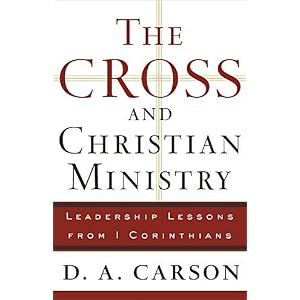
"Western evangelicalism tends to run through cycles of fads. At the moment, books are pouring off the presses telling us how to plan for success, how “vision” consists in clearly articulated “ministry goals,” how the knowledge of detailed profiles of our communities constitutes the key to successful outreach. I am not for a moment suggesting that there is nothing to be learned from such studies. But after a while one may perhaps be excused for marveling how many churches were planted by Paul and Whitefield and Wesley and Stanway and Judson without enjoying these advantages. Of course all of us need to understand the people to whom we minister, and all of us can benefit from small doses of such literature. But massive doses sooner or later dilute the gospel. Ever so subtly, we start to think that success more critically depends on thoughtful sociological analysis than on the gospel; Barna becomes more important than the Bible. We depend on plans, programs, vision statements – but somewhere along the way we have succumbed to the temptation to displace the foolishness of the cross with the wisdom of strategic planning. Again, I insist, my position is not a thinly veiled plea for obscurantism, for seat-of-the-pants ministry that plans nothing. Rather, I fear that the cross, without ever being disowned, is constantly in danger of being dismissed from the central place it must enjoy, by relatively peripheral insights that take on far too much weight. Whenever the periphery is in danger of displacing the center, we are not far removed from idolatry.
~ D.A. Carson, The Cross and Christian Ministry
Labels:
Gospel,
pastoral ministry
Thursday, September 30, 2010
Spurgeon on Quality & Quantity
"Remember, dear brother, if you give your whole soul to the charge committed to you, it does not matter much about its appearing to be a somewhat small and insignificant affair, for as much skill may be displayed in the manufacture of a very tiny watch as in the construction of the town clock; in fact, a minute article may become the object of greater wonder than another of larger dimensions. Quality is a far more precious thing than quantity."
~ Charles Spurgeon, "Individuality, and Its Opposite," in An All-Around Ministry
Labels:
church health,
pastoral ministry
Friday, September 24, 2010
How Do I Love Someone Who Talks Too Much?
Ever have a member of a Sunday School class or Bible study overpower the conversation? Ever wonder how to respond to someone who simply talks too much and listens too little? Mike Emlet, author of CrossTalk, answers these questions:
Labels:
church membership,
pastoral ministry
Wednesday, September 22, 2010
Church Removes 575 Members in One Night
My friend David King, a pastor in Tennessee, recently led his church to remove 575 members from their roles.
Jonathan Leeman interviews him here about the reason and means.
Labels:
church health,
church membership,
pastoral ministry
Sunday, September 12, 2010
Spurgeon to Preachers: Take a Walk!
"He who forgets the humming of the bees among the heather, the cooing of the wood-pigeons in the forest, the song of birds in the woods, the rippling of rills among the rushes, and the sighing of the wind among the pines, needs not wonder if his heart forgets to sing and his soul grows heavy. A day's breathing of fresh air upon the hills, or a few hours, ramble in the beech woods’ umbrageous calm, would sweep the cobwebs out of the brain of scores of our toiling ministers who are now but half alive. A mouthful of sea air, or a stiff walk in the wind's face, would not give grace to the soul, but it would yield oxygen to the body, which is next best."~ Charles Spurgeon, Lectures to My Students
Labels:
depression,
pastoral ministry
Sunday, August 22, 2010
The Ways of Destroying the Church

"The ways of destroying the church are many and colorful. Raw factionalism will do it. Rank heresy will do it. Taking your eyes off the cross and letting other, more peripheral matters dominate the agenda will do it-admittedly more slowly than frank heresy, but just as effectively over the long haul. Building the church with superficial 'conversions' and wonderful programs that rarely bring people into a deepening knowledge of the living God will do it. Entertaining people to death but never fostering the beauty of holiness or the centrality of self-crucifying love will build an assembling of religious people, but it will destroy the church of the living God. Gossip, prayerlessness, bitterness, sustained biblical illiteracy, self-promotion, materialism-all of these things, and many more, can destroy a church. And to do so is dangerous: 'If anyone destroys God’s temple, God will destroy him; for God’s temple is sacred, and you are that temple (1 Cor. 3:17).' It is a fearful thing to fall into the hands of the living God."
- D.A. Carson, The Cross and Christian Ministry
Labels:
books,
local church,
pastoral ministry
Friday, August 20, 2010
Lloyd-Jones: In Soul Care, There is Nothing More Futile Than...
“Though we are all Christians together, we are all different, and the problems and the difficulties, the perplexities and the trials that we are likely to meet are in a large measure determined by the difference of temperament and of type. We are all in the same fight, of course, as we share the same common salvation, and have the same common central need. But the manifestations of the trouble vary from case to case and from person to person. There is nothing more futile, when dealing with [a] condition, than to act on the assumption that all Christians are identical in every respect. They are not, and they are not even meant to be.”

Labels:
books,
depression,
pastoral ministry
Monday, March 29, 2010
Good Christians, Good Husbands?

In John Piper's announcement about his upcoming leave of absence, he confessed, "the precious garden of my home needs tending." (I recommend you read the article and watch the video. It makes me love and respect Piper all the more.)
Those words reminded me a book that every pastoral couple should read: Good Christians Good Husbands?: Leaving a Legacy in Marriage and Ministry by Doreen Moore.
by Doreen Moore.In her first three chapters, Moore examine the marriages of John & Molly Wesley, George & Elizabeth Whitefield and Jonathan & Sarah Edwards. She concludes with a chapter of observations and lessons learned for husbands and for wives.
It is an interesting, convicting and helpful blend of reading on historical biography, ministry philosophy, and marriage.
Here are a couple of the blurbs from the back:
"...a truly wise book on the problem of combining ministry and marriage to the glory of God and the good of all concerned." ~ J. I. Packer
"...each reader will receive rewards in personal development far in excess of the time invested in reading." ~ Tom Nettles
Labels:
books,
marriage,
pastoral ministry
Thursday, March 11, 2010
Three Books on Anxiety, Worry & the Fear of Man
Three great books by Ed Welch:


Labels:
anxiety,
counseling,
fear,
pastoral ministry,
rest,
worry
Thursday, July 23, 2009
The Tennessee Baptist Convention's Music Ministry Leadership Conference
 I'll be leading four sessions at the TBC's Music Ministry Leadership Conference next month. If you're at the conference, please say hello!
My sessions are:
1. The Primacy of Preaching in Corporate Worship
2. Teaching Songs that Teach: Helping God's People Think and Sing
3. Why Your Congregation Ought to Have a Worship War (Every Sunday)
4. The Pastor as Hymn-Writer
Labels:
conferences,
hymns,
local church,
music,
pastoral ministry,
preaching
Subscribe to:
Posts (Atom)